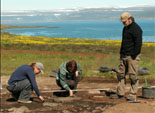
The Vatnsfjörður Excavation Project
15 July - 9 August 2013
The NABO Field School in North Atlantic Archaeology at Vatnsfjörður ran during the summer of 2013.
PDF flyer for the 2013 Field School.
The NABO field school began as a cooperative venture with the Institute of Archaeology, Iceland (FSÍ) in 1997. Originally the field school centered on the long running excavations at Hofstaðir, later expanding (along with the Mývatn projects) into a wider investigation of multiple Viking Age sites in the landscape. The Mývatn field school continued through the summer of 2004, eventually providing students from 26 nations a chance to experience the hot springs, lava fields, and rich insect life of this highland lake basin. The field school collaborated closely with the Bradford University field school at Old Scatness led by Steve Dockrill and Julie Bond, and with the NSF-Funded Research Experience for Undergraduates program led by Sophia Perdikaris (Brooklyn College CUNY).
Film: Við Djúpið/In the Depths
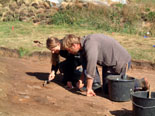
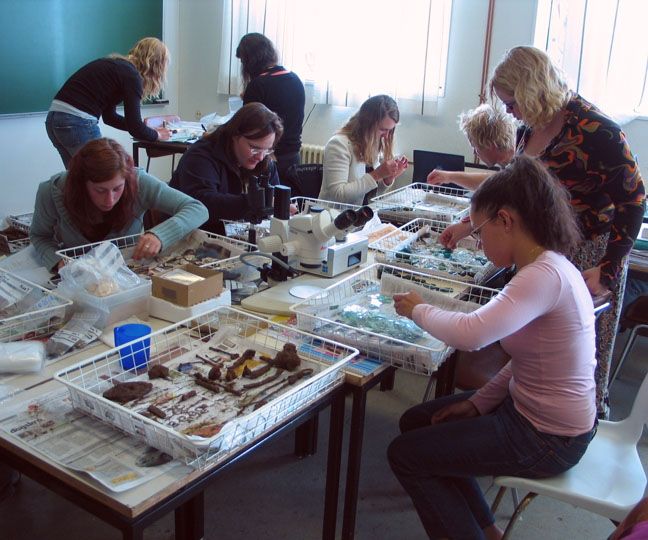
Við Djúpið/In the Depths by BUTET Stephane available on Vimeo. The title "Við Djúpið" refers to the name of the region ("Ísafjarðardjúp"), but also to the experience of young archaeologists, exploring the depths of time. In this documentary, there is a brief description of the programme and the training of field methods as well as post-excavation work.
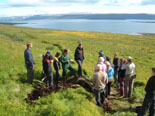
In 2005, the field school shifted venue to Vatnsfjörður in the impressive West Fjords of Iceland. Since then the school has been run by Dr. Karen Milek (U Aberdeen) and Gardar Gudmundsson (FSI) with the active participation of Christian Keller (U Oslo) and a full range of NABO collaborating specialists. The Vatnsfjörður Field School in North Atlantic Archaeology is now a collaboration involving the Icelandic Ministry for Education, the Archaeological Institute Iceland (FSI), the University Centre of the West Fjords, the Medieval Westfjords Society, University of Iceland, University of Aberdeen, University of Oslo, and the Northern Science & Education Center of CUNY. The Icelandic Government is kindly subsidising the cost of food, housing, and tuition. This much improved and upgraded NABO field school is aimed at graduate students or senior undergrads with some field experience and an interest in archaeology as a profession, and is run with a high level of involvement in excavation, survey, and laboratory analysis.
The director Dr. Karen Milek is herself a graduate of the (now legendary) 1997 class of the early NABO field school. Alumni now represent a growing network of younger scholars pursuing doctoral projects in Norway, Faroes, Iceland, Greenland, Canada, US, and Europe, and many have already begun professional careers focused upon the North Atlantic.
Vatnsfjörður's details on the NABO Project Management System, including field reports.
PDF flyer for the 2013 field school.