
- Version
- Download 3907
- File Size 0.00 KB
- File Count 1
- Create Date 1 August 2013
- Last Updated 26 September 2023
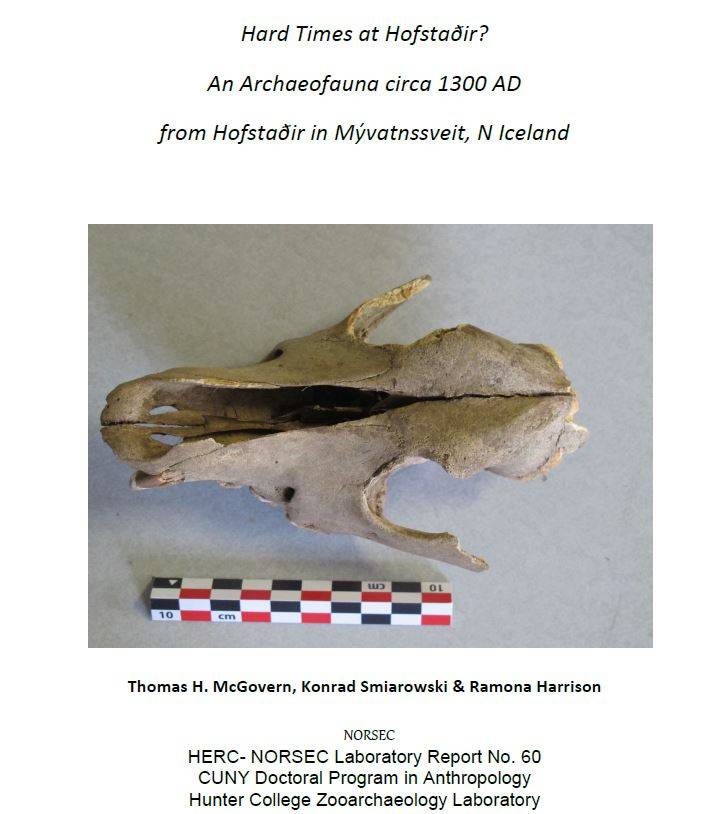
Hard Times at Hofstaðir? An Archaeofauna circa 1300 AD from Hofstaðir in Mývatnssveit, N Iceland
In 2011 a midden deposit was excavated just outside the churchyard wall at the medieval Christian cemetery at Hofstaðir in the Mývatn Lake Basin area of northern Iceland. This deposit rests on a volcanic tephra H 1300 and has produced two AMS C14 dates from terrestrial diet cattle bone that suggest the archaeofauna was formed at the very end of the 13th century or early 14th century. A small but quantifiable archaeofauna was recovered from these deposits, and represents the only current high medieval animal bone evidence from Hofstaðir. This ca. 1300 CE archaeofauna shows both some continuity and contrasts with the much larger Viking Age archaeofauna excavated 1996-2002 from the area of the great hall to the northeast. The proportions of cattle to caprines (sheep and goat) remain relatively stable, but goats and pigs have both disappeared from the domestic animal assemblage. Seal bones make up a substantial proportion of the wild species and the identified seals are nearly all harp seals associated with drift ice in Iceland. The presence of harp seal bones at this inland site suggests the sort of community-wide participation in sealing later documented for the drift ice years of the 17th-19th centuries. A surprising number of dog bones and a single cat are also present. The pattern of extreme fragmentation and extraction of bone grease (collagen) shows strong contrast to earlier Viking Age collections from Mývatn, and resemble Greenlandic bone processing patterns. The archaeofauna is associated with impact of the abruptly lowered temperatures following the major 1258 eruption and sea ice onset now dated to AD 1275-1300, and may reflect the famine conditions in North Iceland reported in contemporary documents. This late 13th to early 14th century inland archaeofauna thus provides both a “hard times” signature and an indication of an ultimately successful adaptive response to sudden climate change.
Alternative formats:
If you require this document in an alternative format, such as large print or a coloured background, please contact the author(s) or publisher. If it is a document authored by NABO, please contact us, either via our contact form or by emailing anthony.newton@ed.ac.uk.Related Posts



Share this: