- Version
- Download 1964
- File Size 0.00 KB
- File Count 1
- Create Date 1 December 2008
- Last Updated 27 September 2023
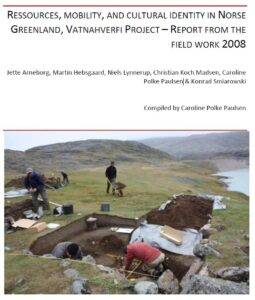
Resources, Mobility, and Cultural Identity in Norse Greenland AD 980 - 1450
The project Resources, Mobility, and Cultural Identity in Norse Greenland AD 980 – 1450 integrates studies of single sites and a regional study of the Vatnahverfi region in the Norse Eastern Settlement. The Vatnahverfi region was densely populated in the Middle Ages and the same is true today, where several of the Norse farms have been resettled by modern sheep farmers. The project connects the past with the present, among other thing through the “Kids Archaeology programme”.
The site investigations have targeted both high status farms with churches and more humble farms. The project integrates traditional archaeological method, environmental archaeology, zooarchaeology, analysis of pollen and macro fossils, soil analysis, aDNA, human genetic studies, climate and landscape modeling.
Among other things the project seeks to highlight:
- What were the natural preconditions for settlement
- What was the economic basis for the Norse settlement in Greenland
- How was Vatnahverfi settled? Which farms were first settled; which farms were first depopulated. And why?
- Depopulation if the Norse Greenland settlements - when and why?
- How did the social and economic relationship between farms develop?
The project has been funded by IPY funds from The Commission for Scientific Research in Greenland and NSF.
Alternative formats:
If you require this document in an alternative format, such as large print or a coloured background, please contact the author(s) or publisher. If it is a document authored by NABO, please contact us, either via our contact form or by emailing anthony.newton@ed.ac.uk.Related Posts

Share this: